







4 min read
How To Take Back Your Life While Working Remotely (2026 Edition)
 Joe Rando
:
Jun 30, 2026, 3:00:00 PM
Joe Rando
:
Jun 30, 2026, 3:00:00 PM
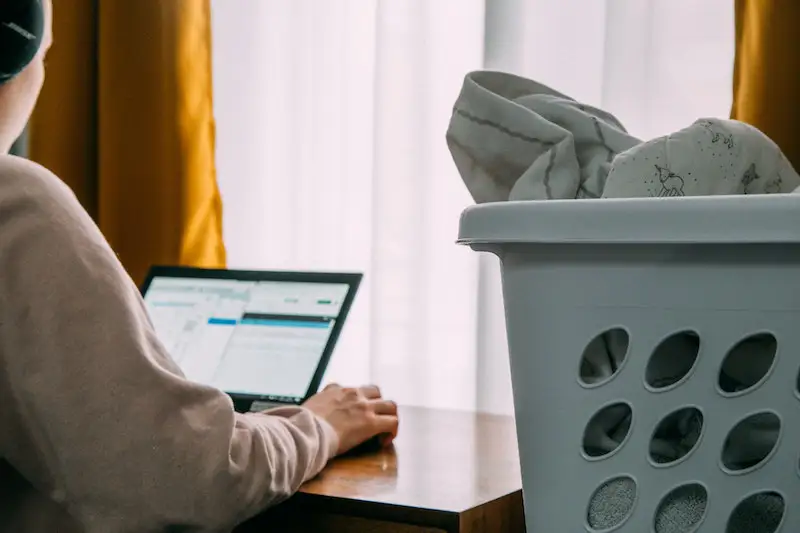
A few years ago, "working remotely" meant negotiating a hallway office with your kids, your dog, and a sourdough starter for company. The world has moved a long way past that moment. Remote work isn't an emergency accommodation anymore; it's just work. And for millions of people, "remote" has quietly become "solo." You're not just working from home; you're running the whole show from home, by yourself, on purpose.
That shift changes the question. It used to be "how do I stay productive while working from my kitchen table?" Now it's "how do I build a business that fits the life I actually want, instead of a life that fits around the business?"
The good news: the underlying problem hasn't changed. Your attention is still finite, your to-do list still feels infinite, and the tool you need most still isn't another app; it's a system. Below is an updated take on the GTD (Getting Things Done) framework, built for how solopreneurs actually operate today: lean, AI-assisted, and unwilling to trade their whole life for their business.
Why This Matters More in 2026
The solo business boom is real and it's not slowing down. Nearly 30 million Americans now run businesses without employees, and AI tools have made it possible for one person to do work that used to require a small team. That's the opportunity. It's also the trap.
When you can do everything yourself, it's tempting to try to do everything yourself, all the time, with no edges around your day. Solopreneurs report higher stress than business owners who have employees to lean on, and a large share say they need to earn far more than they currently do before they'll feel like they've "made it." Freedom without structure just becomes a longer leash on the same treadmill.
The solopreneurs who are actually thriving right now aren't the ones working the most hours. They're the ones who treat their attention like their most valuable, least renewable asset, and who use AI and automation not to cram more in, but to buy back time for the parts of life that have nothing to do with revenue.
The GTD Methodology, Still Undefeated
I'll say what I said the first time I wrote about this: I have no affiliation with David Allen or Getting Things Done®. I'm just a fan who thinks his five-step framework is one of the few productivity ideas that has actually aged well. If anything, it's more relevant now that "work" has no walls around it.
The five steps:
- Capture — Collect what has your attention
- Clarify — Process what it means
- Organize — Put it where it belongs
- Reflect — Review frequently
- Engage — Simply do
Simple in concept. The work is in actually doing it, and in 2026, you have far better tools to help you than you did before.
Applying GTD to a Life-First Solo Business
Capture
Every open loop in your head, your phone, your sticky notes, your fourteen open browser tabs, it all goes onto one list. As a solopreneur, your list isn't just client deliverables. It's invoicing, content, admin, learning new tools, your actual life (family, health, the dentist appointment you've rescheduled twice), and the strategic thinking that never happens because the urgent stuff keeps eating it.
This is also where AI earns its keep. Voice-to-text capture, AI meeting notes, and assistants that turn a rambling voice memo into a clean task list mean that capture takes minutes instead of an evening. Use whatever tool you trust, but the rule stays the same: get it out of your head and into one place today.
Clarify
Go through the list and be honest. What can you act on now? What's waiting on someone else? What no longer matters and can just be deleted?
This is also the moment to ask the question a lot of 2026 solopreneur culture has started asking out loud: does this task need a human at all? A genuine cultural shift has happened here: outsourcing isn't just "hire a contractor" anymore, it's "let an AI agent draft the first version" or "automate this with a no-code workflow." Clarify isn't just sorting tasks; it's deciding which of them deserve your actual hands and judgment, and which don't.
Organize
Now you prioritize, but resist the urge to start executing yet. Allen's four buckets still work well for a one-person business:
- Projects — the bigger things you're building (a launch, a course, a new service line)
- Next Actions — high-priority tasks you can act on right now
- Waiting For — things blocked on a client, a vendor, or an AI tool still processing
- Calendar — date-specific commitments and the reminders that keep them from slipping
One addition worth making for solopreneurs specifically: protect time on your calendar for the things that don't generate revenue but generate you (exercise, time with people you love, actual rest). If it's not on the calendar, it loses to whatever client email showed up at 4pm. Life-first isn't a mood, it's a scheduling decision.
When you break Next Actions into sub-tasks, you make starting easier. "Launch new offer" turns into something like:
- Sub-task: Define the offer and price
- Sub-task: Draft the sales page
- Sub-task: Set up the AI-assisted email sequence
- Sub-task: Decide on launch date and tell three people first
Small steps remove the friction that keeps big tasks sitting untouched for weeks.
Reflect
This is the step solopreneurs skip most often, because there's no manager forcing a weekly check-in. Build the check-in yourself. Once a week, look at your system and ask what's working, what's not, and what's quietly draining you that you haven't named yet.
This is also the moment to check in on the bigger question underneath all the tactics: is this business actually buying you the life you wanted, or has it just become a more flexible version of the job you left? A lot of people got into solopreneurship chasing autonomy and ended up recreating the same hustle, just without a boss to blame. Reflect is where you catch that early.
Engage
Do the work. Trust the system you built in the first four steps enough to stop second-guessing it in the moment. One person, working from a clear list with clear priorities, can move remarkably fast. T hat's the whole premise of the modern one-person business.
The Bigger Shift: From "Productivity" to "Life-First"
The old version of this advice was about getting through a strange, disorienting season without losing your grip. The 2026 version is about something more deliberate: building a business specifically designed around the life you want, instead of squeezing a life into whatever time a business leaves behind.
That's the real definition of life-first solopreneurship. Not "I work for myself," but "I designed this on purpose, and I can tell you exactly what it's for." A system like GTD doesn't replace that decision, but it does give you back the time and clarity to actually make it, instead of staying so buried in the list that you never get to ask the bigger question at all.