


 Joe Rando
The Boss You Thought You Quit
You left the job for a reason. Probably a few of them. The commute. The manager who scheduled meetings to schedule meetings. The quiet math of handing your best hours to someone else's dream.
So you went solo. Freedom. Finally.
And for a while, it was a struggle to get the business running, but it was your struggle.
Then something shifted. The laptop came to dinner. Sunday stopped feeling like Sunday. You answer email in line at the pharmacy, in bed, on the vacations you didn’t take. You built a business to get your life back, and somewhere along the way the business helped itself to the whole thing.
Most of us don't notice the moment it happens. There's no alarm. It creeps in quietly, one "I'll just handle this real quick" at a time, until the thing you built to free you is running the show.
You didn't escape a boss. You became one, to yourself, and this one never sleeps.
It Isn't Because You're Lazy
Let's kill that idea right now. You're not here because you slacked off.
Most solopreneurs I know work harder than they ever did on a paycheck. They care more, too. Effort was never the problem.
The problem is that you built with a plan for your business and no plan for your life.
You mapped the offer. The pricing. The funnel. You probably have a content calendar! What you never sat down and designed was the life the business was supposed to serve. So the business did what businesses do when nobody draws the lines. It expanded to fill every inch of available space.
And the numbers say you've got company. Around 65% of people start a business for freedom and quality of life. Over 80% end up losing sleep over it. 87% of small business owners report poor mental health. More than one in three burn all the way out.
This is a design problem, not a motivation problem.
Here's the root of it: most of us build skills-first. You were good at the thing, so you sold the thing. Reasonable. But "I'm good at this" is a different question than "what do I want my days to look like?" Skip the second one and you get a business built around your skills instead of your life. It works. It just doesn't work for you.
The Villain Has a Name
Every good story has a villain. Yours does too. It just never bothered to introduce itself.
Call it The Ownership Trap.
Building without a life plan. Running the whole operation on email, chat, and memory. Having no plan to evolve as your life changes, or as the world changes it for you.
It runs on three causes, and you'll likely recognize all three.
No Design. The business got built skills-first, never life-first. Nobody asked what you actually wanted, so the business answered for you. It took everything.
No System. Commitments live in email. Deadlines live in memory. Promises made by clients and contractors vanish into the stream the second a new message lands on top of them. Things fall through the cracks, and you spend your days reacting instead of running the place.
No Plan to Evolve. Life moves. Goals move. The business that fit perfectly two years ago is quietly the wrong business today. With no plan to evolve it, you either stagnate or blow it up and start over. Both roads loop right back into the trap.
Nobody defends The Ownership Trap. Nobody argues it's working. Most of us just never had a name for it, so we assumed the problem was us.
Just know that it wasn't.
Start at the End You Actually Want
So flip it.
A Life-First Solopreneur Business starts with the life, not the business. You define the life you want first. Then you build a business that serves it. You run that business on Managed Commitments so nothing slips through the cracks. And you evolve it on purpose as your life and goals change.
There's a formula for it:
Life-First Design + Managed Commitments + Planned Evolution = Life-First Solopreneur Business
When it's working, the whole relationship turns over. Your business doesn't own you. You own your business.
Think of It as a GPS
If that still sounds abstract, picture a GPS. A GPS for a life you actually designed.
You set the destination. The system keeps you pointed at it. When something needs your attention, it surfaces; when nothing does, it stays quiet. And when life changes the route on you, which it will, it helps you recalculate instead of leaving you stranded on the shoulder.
You stop monitoring everything at once. You focus on what matters now, and trust the system to help you fix the rest when it's time.
Three Pillars, No Skipping
This isn't a slogan. It's a method, and it stands on three pillars.
Life-First Design comes first. Phase 1. Before the first client, before the pricing page, before you fall in love with your funnel, you define the life. What do your days look like? What does success actually mean to you, and not to LinkedIn? You build the business around those answers.
Managed Commitments is how it runs. Phase 2. The business operates on commitments, not communication. Everything promised, by you and to you, gets captured, tracked, and closed. Clients, contractors, collaborators, the whole network. And when a problem surfaces, you don't drop everything to chase it; you note it and track it to be tackled in Phase 3.
Planned Evolution keeps it yours. Phase 3. You’ve tracked what’as not working for you. You note when your goals change. You identify when the world changes. Then you adjust or reinvent based on these. The business evolves as needed, on purpose, not by accident.
All three are required. Skip Life-First Design, and the business eats your life. Skip Managed Commitments, and you end up stressed, scrambling, and fighting fires, regardless of how well you designed the business. Skip Planned Evolution, and even a beautifully built business can slowly become the wrong one. You need all three, or the trap is sitting there waiting.
Who This Is For
The Life-First Movement is for solopreneurs who chose this path for one reason: they wanted a business that serves their life.
It is not for people chasing billions. If the entire point is to build the biggest possible empire as fast as humanly possible, hire employees as soon as you can. But if you went solo to get a life and somewhere along the way misplaced it, you're in the right place.
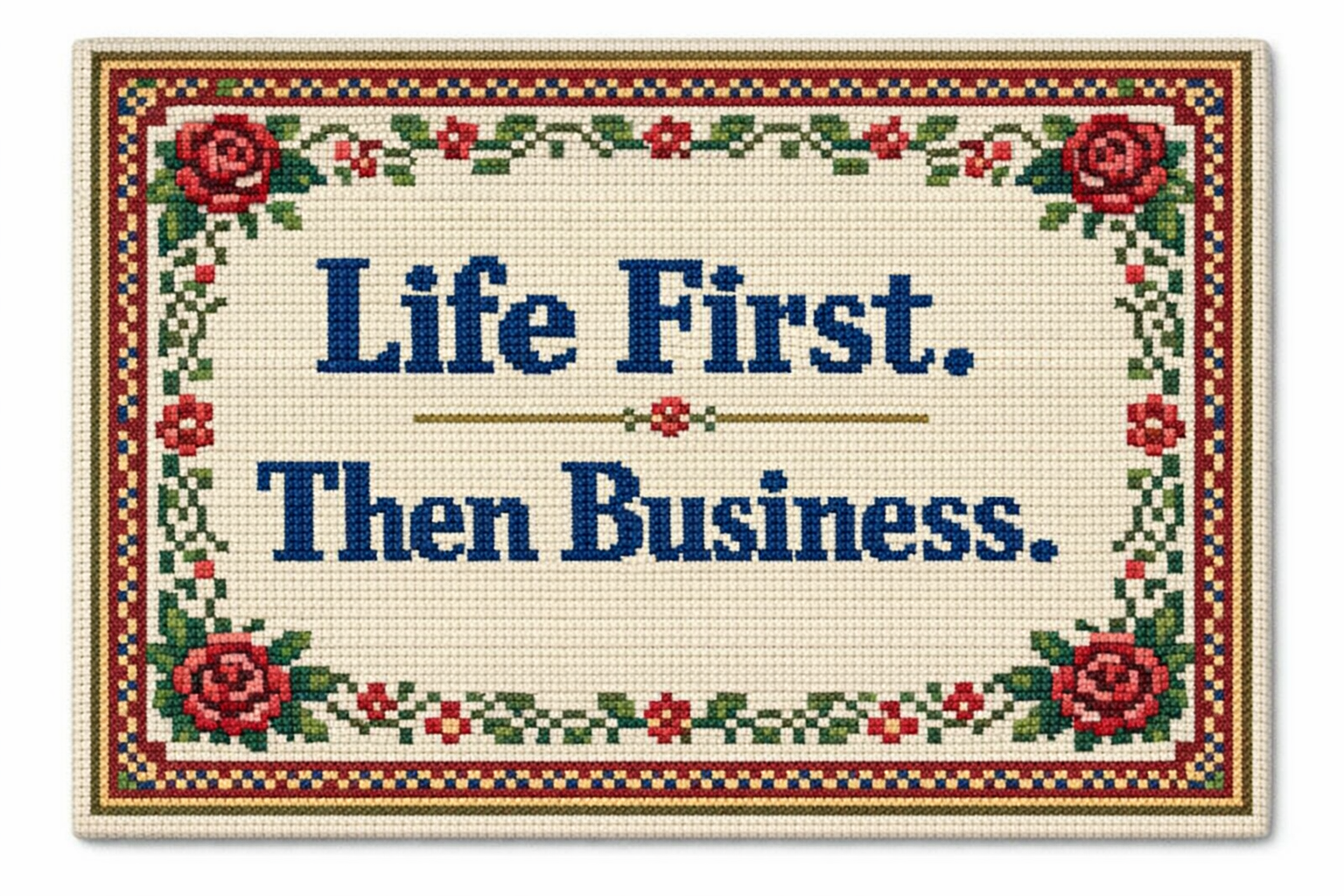
Life First. Then Business.
Here's the promise, plainly. A business that serves your life. Not someday, once you've finally earned it. By design, from the start.
That's what the trap takes from most of us. And it's what designing the business around the life hands back. You set the destination. You run on commitments instead of crossed fingers. You evolve on purpose. And the boss who never sleeps finally clocks out, because you're the one holding the map again.
If any of this landed, read the full Manifesto. It's where the whole idea lives, and it won't take long. And when you're ready to start putting it into practice, you can start free.
Life first.
Then business.
FAQs
-
Why does it feel like my business owns me instead of serving my life?
Because most solopreneur businesses get built skills-first instead of life-first. You designed the offer, the pricing, and the funnel, but never designed the life the business was supposed to serve, so it expanded to fill every hour you have. That is The Ownership Trap, and it is a design problem, not a sign you are working too little.
-
What is The Ownership Trap?
The Ownership Trap is what happens when a business ends up running its owner instead of serving them. It shows up as lost sleep, unpredictable income, and burnout. It traces back to three things: building without a life plan, running the business on email and memory instead of commitments, and having no plan to evolve as life changes.
-
What is a Life-First Solopreneur Business?
A Life-First Solopreneur Business is one designed around the life you want first, then built to serve it. The formula is straightforward: Life-First Design + Managed Commitments + Planned Evolution = Life-First Solopreneur Business. When it is working, you own your business instead of the other way around.
-
How is this different from work-life balance or time management?
Work-life balance and time management try to manage the symptoms after the business is already built wrong. A Life-First Solopreneur Business starts a step earlier, at the design of the business itself, so your life and your business stop competing for the same hours.
-
5. What are the three causes that lead to The Ownership Trap?
There are three. No Design, where the business is built around your skills rather than your life. No System, where commitments live in email and deadlines live in memory, so things slip. And No Plan to Evolve, where a business that fit two years ago quietly becomes the wrong business today. Most trapped solopreneurs have all three at once.
-
What does it mean to run a business on Managed Commitments?
It means every promise, the ones you make and the ones made to you, gets captured, tracked, and closed instead of scattered across inboxes and memory. The commitment becomes the unit of work, so nothing falls through the cracks. This is the operating layer that keeps a Life-First Solopreneur Business from drifting back into the Trap.
-
How do I start building a Life-First Solopreneur Business?
Start with the life, not the business. Before you touch pricing or your funnel, define what you want your days to look like and what success actually means to you, then build the business around those answers. From there you run it on Managed Commitments and revisit it on purpose as your life changes. The LifeStarr Manifesto and the free Academy walk through each step.
-
Who is the Life-First approach for, and who is it not for?
It is for solopreneurs who chose this path to get a life that serves them: coaches, consultants, freelancers, creators, and developers across very different business models. It is not for people whose only goal is the biggest possible empire as fast as possible. If you went solo for freedom and want to keep it, you are in the right place.